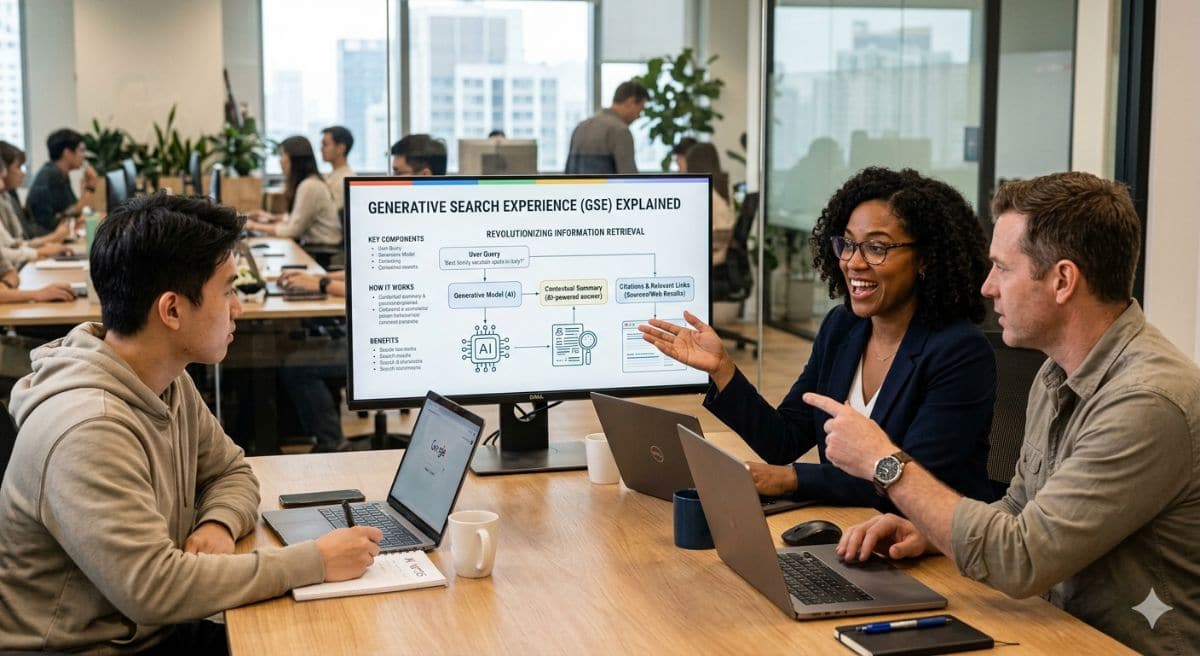
Generative Search Experience Explained: What It Means for SEO
Have you noticed that when you search online these days, you are less likely to see a list of links and more likely to get an actual answer right on the results page? Instead of sending you off to multiple websites, search engines now pull together summaries and recommendations, giving you what you need without making you click around.
That is all due to generative search experience, which honestly feels like one of the biggest shake-ups in search in years. If you run a business, manage a website or handle marketing, you have to pay attention to this shift. The rules for getting noticed online are changing and SEO has to keep up.
What Is a Generative Search Experience?
AI powers a generative search experience. It gathers information from dozens of sources, then combines and distills it directly within the search results. Instead of just serving up links, the AI reads and understands what is out there and then hands you a tidy, synthesized answer.
Traditional search aimed to help you find information. Generative search aims to help you understand it faster. Imagine searching a topic and instead of scrolling through several articles, you get a quick overview that pulls together the key insights and recommendations. It totally changes how people interact with search and how websites fight to stay visible.
Why Are Search Engines Moving Toward AI-Generated Answers?
People don’t want to waste time bouncing between different sites anymore. They want quick, clear answers, not hours of research. AI-generated search results make that possible by:
- Summarizing information fast
- Cutting down research time
- Offering more helpful and contextual replies
- Having conversations and not just showing links
- Making decisions easier
As artificial intelligence gets smarter, search engines are moving from just finding information to actually generating customized answers. We are watching the entire search landscape transform.
How Does Generative Search Actually Work?
At the heart of it, the generative search experience combines classic search tech with advanced language models and AI reasoning. Here is how it usually goes:
- You ask a question
- The search engine looks for relevant sources
- AI reads and interprets the information
- You get a summarized answer
- Sometimes, it shows the sources alongside the answer.
Search engines aren’t as focused on who is ranked first anymore. They care more about giving you the best and most useful response. That changes the whole game for how content gets found – and how people digest it.
What Generative Search Means for SEO?
If you want your business to be seen online due to the rise of GSE SEO, the old tactics still matter, but they are not enough. It is not just about rank anymore. Your content needs to help AI understand what you are saying – so it can reference you in those answers.
Think beyond clicks. Now, your content is job might be to contribute to AI-generated summaries. You will need to optimize for:
- Content
- Authority
- Clarity
- Semantic relevance
- Structured information
- User intent
If your site communicates clearly with AI, it has a way better shot at staying visible as search changes.
The Shift From Rankings to References
Before, SEO was basically about getting your link to the top spot. Now, the real competition is whether the AI-generated search results pick your content to reference in their summaries rather than simply appearing as a blue link. So, the big question businesses must ask is: “Does the AI understand my stuff well enough to include me in its answer?” That is just as important as traditional rankings.
How Your Content Strategy Needs to Change?
Success with GSE SEO means writing content that is deep, trustworthy and easy for AI to parse. Instead of churning out a bunch of light blog posts, focus on detailed answers to actual user questions.
The good content should have:
- Clear explanations
- Expert opinions
- Logical structure
- Supporting examples
- Accurate information
- Real depth
AI systems really like content that shows authority and gives complete answers.
Why Is Semantic SEO More Crucial Than Ever?
One huge shift with generative search experience is how much semantic understanding matters. AI looks at the relationships between your topics and concepts. Optimization isn’t just about keywords anymore – it is about meaning and connections.
For example, a page on digital marketing probably touches on SEO, content marketing, user intent, analytics, AI search and conversion optimization. The more you make those connections, the more likely AI is to understand that you are an expert.
The Growing Vitality of Structured Data
As AI systems process increasing amounts of information, structured data plays a crucial role in improving machine readability.
Structured data helps search engines understand:
| Content Type | Purpose |
|---|---|
| Organization Schema | Business identity |
| FAQ Schema | Question-and-answer content |
| Article Schema | Content classification |
| Product Schema | Product information |
| Service Schema | Service details |
| Review Schema | Trust and reputation signals |
Structured data isn’t a magic ticket to visibility, but it gives important context that helps AI get your website.
How Do AI-Generated Search Results Impact Website Traffic?
Everyone’s talking about whether AI-generated search results kill website visits. Sometimes, users get enough information from the search results – they never need to click through. That is the whole “zero click search” trend. But honestly, there is upside, too.
If your business becomes a trusted resource for AI systems, it boosts your brand, authority, recognition and trust. It sets up for customers later on. Influence matters more than plan click numbers.
General Misconceptions About Generative Search
A lot of folks get generative search experience wrong:
“Traditional SEO is dead.”
Nope. Good SEO still matters. Technical basics, content quality and site performance – they are still crucial. Generative search builds on these. It doesn’t replace them.
“Keywords are useless.”
Keywords still help. But context and intent are super important, too.
“Only large brands will benefit.”
Smaller businesses with specialized, authoritative content can do really well if they meet specific user needs.
Knowing the reality helps you build better strategies.
How to Prepare Your Business?
AI search isn’t a distant trend – it is here now. The sooner you adapt, the better you will do.
- Your action plan:
- Keep information accurate
- Write top-notch content
- Build authority
- Improve semantic relevance
- Add structured data
- Strengthen technical SEO
- Focus on what users want
The Future of Generative Search Experience
Search is heading toward personalized, conversational and intelligent experiences. Expect:
- Better AI summaries
- Personal search responses
- Interactive results
- More AI-powered recommendations
- Action-driven search workflows
As all this evolves, your website needs to be human-friendly and AI-friendly. Early adopters are set to thrive in the new search ecosystem.
FAQs:
It is where AI generates summarized answers directly inside search results, instead of just linking to websites.
GSE SEO strategies focused on getting your content noticed in AI-powered search environments and AI-generated search results.
AI-generated search results analyze information from different sources, interpret it and serve up a summarized answer for searches.
Absolutely. But now you also need to optimize for AI systems that generate summaries and answers.
It changes how people find information online. Businesses that pivot fast boost their visibility, authority and competitiveness.
Final Words
The generative search experience is a whole new way people find and use information online. Search engines aren’t just gatekeepers – they are answer machines. SEO is just about rankings anymore. It is really about authority, context and making your content machine-readable. The organizations that jump on this today are set up for whatever comes next.
Build Your AI-Ready Search Strategy
With AI-generated search results getting more common, you need more than traditional SEO. You need content structures and semantic frameworks that make your site easy for both people and AI to discover. WebMCP helps organizations get ready for the future of search – advanced AI SEO strategies, machine-readable workflows and scalable optimization solutions for the next era.