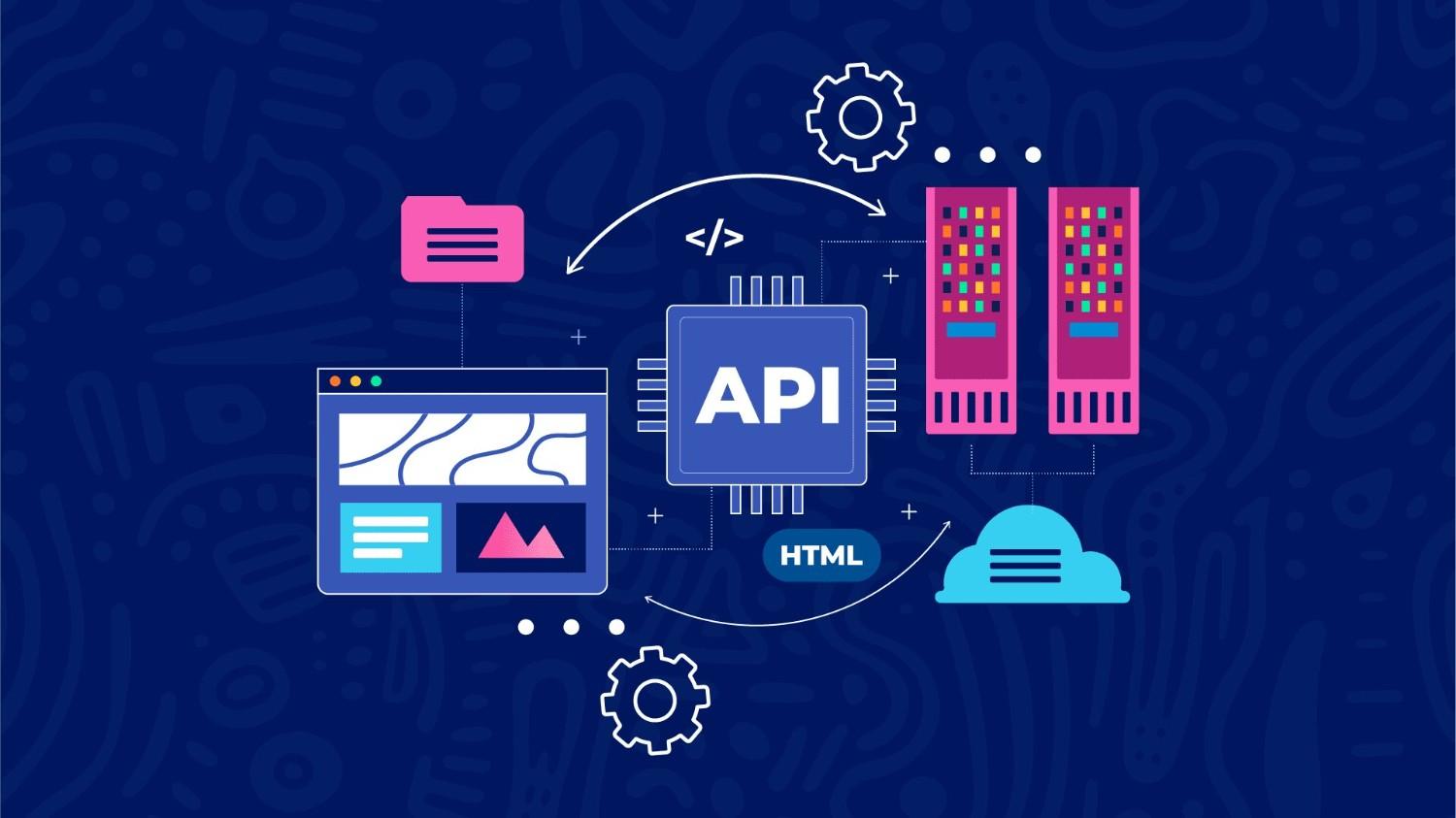
Understanding APIs in AI Web Interaction (Simple Guide)
AI is fundamentally changing how websites are accessed and used. AI systems can now interact with websites in multiple ways. AI can retrieve data, execute workflows and even make decisions based on structured inputs.
But how does an AI communicate with a website? The answer lies in AI website APIs. APIs act as a bridge between two systems. This allows an AI to connect to a website in a consistent and structured manner. As AI adoption grows, APIs are becoming the foundation of modern AI-driven web interaction.
How APIs Work (In Simple Terms)
An API is a collection of rules and guidelines for one system to communicate with another. Let’s use this analogy for a restaurant:
- Your website – a restaurant
- AI – a customer
- API – the waiter
When the customer (AI) goes to a restaurant (your website), they give the waiter (API) a request for food. The waiter (API) goes into the kitchen (your website’s backend) and brings you the food.
This structured communication layer enables reliable AI agent website interaction.
AI Agents Using APIs to Interact with Websites
Instead of navigating websites like humans, AI agents use structured API access to interact directly with web applications.
Through the use of APIs, AI agents can:
- Obtain product information
- Submit forms
- Trigger actions through a workflow
- Retrieve live data
This makes APIs essential for enabling machine-level interaction.
Therefore, without APIs, web scraping or making assumptions would be necessary, as AI tools would be inefficient and unreliable.
What Are AI Website APIs?
AI website APIs are APIs specifically designed to support AI-driven interactions and automated workflows.
The major characteristic of an AI website API would be the following:
- Structured and predictable responses
- Machine-readable formats such as JSON and XML
- Constant and consistent endpoints
- Access to real-time data
These characteristics allow AI systems to:
- Understand the data they are working with
- Execute actions on that data consistently
- Integrate with your platform seamlessly
These characteristics make up the framework of an AI-ready website.
API-First Websites: What Does That Mean?
An API-first website is designed with APIs as the primary interaction layer rather than as an afterthought and has been prioritized as the primary layer of interaction:
Traditional Flow:
- Frontend – Backend – API (optional)
API First Flow:
- API – Frontend – External systems (i.e, AI)
API First Benefit:
- Increased scalability
- Easier integrations
- Enhanced compatibility with AI
In short, the API-first architecture will assist in preparing your site for future AI-driven technologies.
How APIs Power AI on Your Website
AI systems need a reliable way to connect with websites, read data, and complete tasks. That is where APIs (Application Programming Interfaces) come in. As AI agents handle more digital tasks, APIs give them a clear map to understand how a website works and execute actions perfectly.
Key Benefits of Combining APIs and AI Agents
- Organized Communication: APIs set clear rules for how data moves in and out. This helps AI systems exchange information with your website reliably without losing anything in translation.
- Accurate Data and Quick Actions: APIs let AI agents grab real-time information, handle user requests, and finish workflows with high accuracy and consistency.
- Easy Scalability: APIs let your website connect to multiple AI systems, platforms, and apps at the same time. You can expand your reach without rebuilding your core website code.
By creating a structured bridge, APIs make AI-driven websites faster, more dependable, and much easier to grow.
APIs vs. Traditional Website Integration
The difference between how an AI agent interacts with a website when using APIs vs. traditional interaction:
Traditional Interaction:
- User visits the site
- The user reads the site content
- The user manually fills out forms
AI Interaction Using APIs:
- Retrieves structured data from the website
- Processes the retrieved data
- Executes workflows based on the retrieved information
This technology is changing the way we build and design websites.
Limitations of Using APIs Alone
APIs are great tools. However, they cannot provide enough functionality on their own.
Problems with using APIs:
- APIs are not guaranteed to be easily discoverable by AI agents
- AI agents need to have pre-defined integrations established with APIs to function properly
- Data received from APIs can lack a usable execution context
Frameworks such as WebMCP go beyond API functionality by enabling AI agents to create discoverable and executable workflows.
APIs provide structured data access, while frameworks like WebMCP provide execution and workflow orchestration layers.
AI-Ready APIs Best Practices
Here are a few of the best practices you should follow when optimizing your AI website APIs:
- Use consistent data formats: Be strict with JSON or another standard format for your structured outputs.
- Define endpoints: Make sure to explicitly state and define what each of your API endpoints will do.
- Implement authentication: Authenticate and secure access to your APIs by using security controls.
- Enable real-time access: Avoid using outdated or cached data. Always provide your API consumers with the latest data version.
- Document everything: Make sure that your API is easy to understand and use.
Use versioning for APIs to maintain compatibility as systems evolve. These practices ensure reliable AI interaction.
APIs and AI Website Architecture
APIs are a fundamental component of an AI-ready digital ecosystem, acting as a bridge between different website components, including:
- Frontend interfaces
- Backend systems
- AI agents
A well-designed AI website architecture enables seamless communication between these elements by creating a structured interaction layer where data and actions can flow efficiently.
When creators combine structured data, APIs, and execution frameworks, websites build a more connected environment. This environment allows AI systems to understand information, access resources, and perform tasks more effectively. This approach helps teams create scalable and intelligent digital experiences designed for AI-driven interactions.
The Future – API + AI + Execution Layers
The future of web-based interactions lies within the combination of:
- APIs (data access)
- Structured data (understanding)
- Execution layers like Web MCP (action)
Collectively, these components create websites that are:
- Machine-readable
- Automation ready
- AI interactive
Together, these technologies represent the evolution of intelligent digital systems.
REST APIs vs AI Execution Frameworks
Traditional REST APIs were designed to exchange data between systems. They define endpoints, accept requests and return structured responses. While REST APIs are essential for AI integrations, they are primarily focused on data communication rather than autonomous execution.
AI execution frameworks, however, introduce an additional layer that enables AI systems to:
- Discover workflows automatically
- Understand execution logic
- Validate actions before execution
- Perform deterministic interactions
- Handle multi-step automation processes
Key Difference:
| REST APIs | AI Execution Frameworks |
| Focus on data exchange | Focus on execution + automation |
| Require predefined integrations | Enable discoverable workflows |
| Endpoint-driven | Workflow-driven |
| Primarily backend communication | AI-agent interaction layer |
| Limited execution context | Structured execution context |
For example, a REST API may return booking availability data, while an AI execution framework such as WebMCP helps AI agents understand how to complete the booking workflow itself.
This combination of APIs + execution frameworks is becoming the foundation of AI-ready websites and intelligent automation systems.
FAQs:
AI website APIs allow AI systems to access structured data and interact with digital workflows and interact with any website or digital entity where data can be hosted and accessed.
AI agents can now, including using APIs to retrieve data from various sources (whether publicly or privately available), perform tasks (also known as “action execution”) on numerous platforms and connect or integrate with another system API.
An API-first website is designed with the APIs as its primary layer of interaction, offering improved scalability and flexibility for AI integration.
While APIs are a crucial component of the AI interaction ecosystem, additional execution layers are often required before full-fledged AI can successfully interact with a website.
The AI properties of APIs make it possible for AI systems to access your website’s data, so they can understand and interact with your site more efficiently.
Wrap Up
APIs have become a key foundation for building AI-driven website experiences. They help businesses create seamless AI interactions, improve automation, and prepare their platforms for future technologies. However, APIs alone are not enough. When businesses combine APIs with structured data and execution frameworks, they enable AI agents to better understand, access, and interact with websites. This powerful combination transforms static platforms into intelligent digital ecosystems.
Create APIs Ready for AI with Web MCP
Modern AI interaction requires more than simple API connectivity. Businesses now need a complete AI-ready interaction architecture that supports automation, execution and machine-readable workflows.
At WebMCP, we help businesses build API-first, AI-ready platforms using structured data frameworks, optimized API systems and execution layers powered by WebMCP architecture Our approach ensures your website is not only accessible to AI systems but also fully prepared for intelligent automation, scalable workflows and future AI-driven interaction. If you are ready to move beyond traditional APIs and build infrastructure designed for the next generation of AI interaction, now is the time to start.